

- 8 June 2026
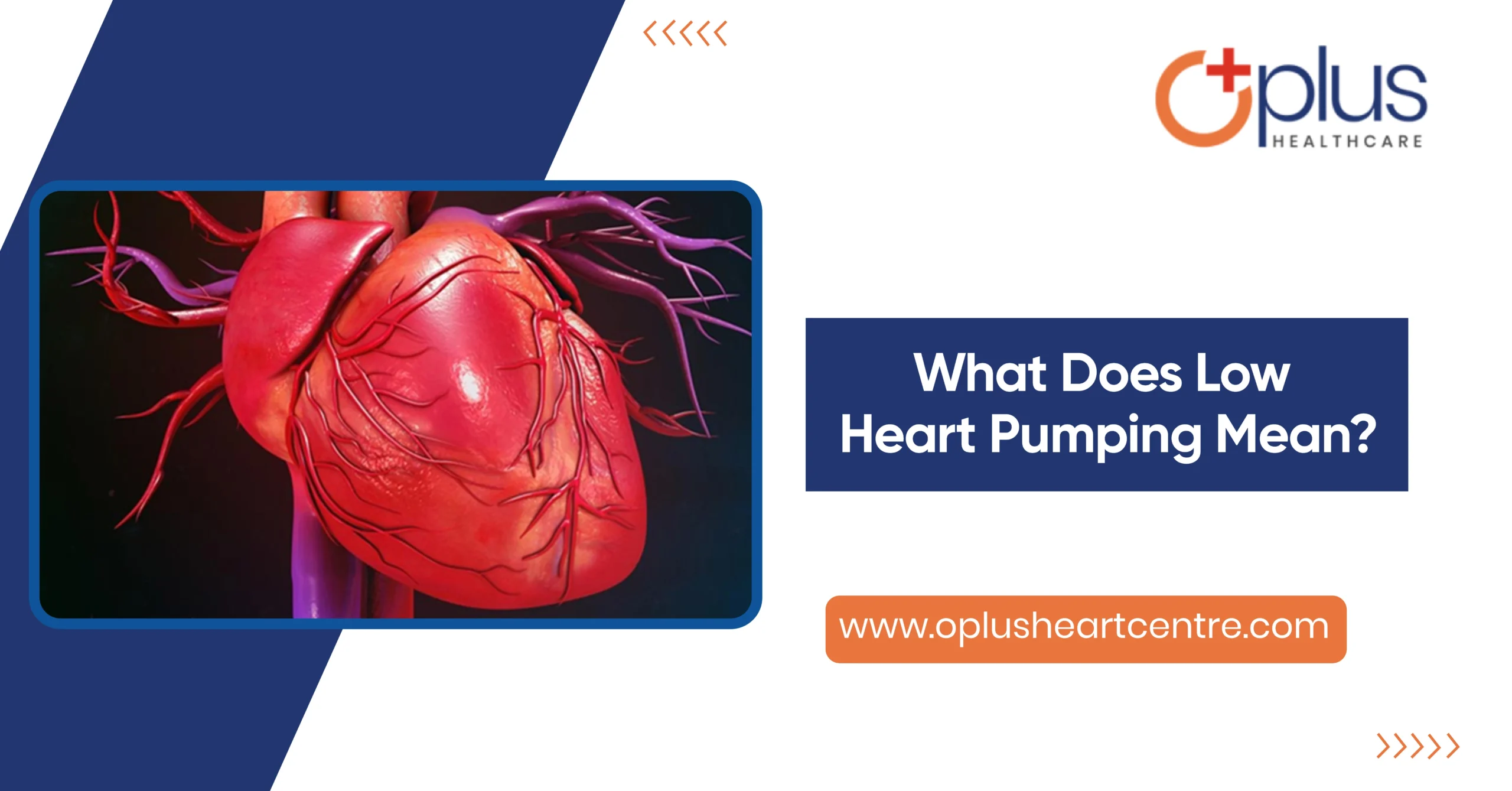
A doctor looks at an echocardiogram report and tells a patient that their heart is pumping at 35 percent. The patient has no idea what that means. Is it serious? Can it be fixed? Will it get worse?
These are completely fair questions. And the answers matter more than most people realise.
Understanding the Basics
The heart is not just a pump. It is a very precise pump. Every time it beats, it does not push all of its blood out — it pushes a specific percentage. That percentage is called the Ejection Fraction, and it is the number doctors use to measure how well the heart is actually doing its job.
A normal ejection fraction is 50 to 70 percent. With each heartbeat, 50 to 70 percent of the blood in the left ventricle goes out to the rest of the body.
When that number drops below 50 percent, something is wrong. That is what doctors mean when they talk about low heart pumping.
How Serious Is It?
A number lower than 50 percent means the heart is not pumping as well as it should. A low ejection fraction is a sign of heart failure and other problems. The lower the ejection fraction, the weaker the heart’s pumping action.
An ejection fraction below 40 percent means the heart is struggling to provide sufficient blood to the body. Values between 40 and 50 percent are considered borderline low and may be a sign of future heart failure risk.
This is not something to monitor quietly for years and hope improves on its own. Untreated low heart pumping progressively weakens the heart muscle further.
What Causes the Heart to Pump Less Efficiently
Causes of low ejection fraction include cardiomyopathy — a disease of the heart muscle with varied causes such as viral infection or genetic disorder. Chronic high blood pressure can also decrease ejection fraction. So can the strain caused by a leaky or narrowed heart valve. An abnormally fast heart rate for a long period of time, such as from uncontrolled atrial fibrillation, can also weaken the heart.
What Low Heart Pumping Feels Like
Symptoms of low ejection fraction include fatigue, shortness of breath, and swelling in the feet and legs.
Climbing stairs becomes an effort. Lying flat at night can feel uncomfortable because fluid backs up into the lungs. Some patients notice their shoes fitting tighter by evening because of ankle swelling. These are not coincidences. They are the body showing the effects of a heart that cannot keep up with demand.
Can It Actually Improve?
Definite yes. With treatment, including medication and exercise, improvement in ejection fraction can be seen within three months. The right combination of medication, lifestyle changes, and targeted cardiac therapy can genuinely raise the ejection fraction back toward normal range.
EECP is a good therapy for patients with low heart pumping who are truly looking for a non-surgical heart treatment. This therapy is very effective as it shows clinically documented results in improving cardiac function and reducing symptoms without hospitalisation or surgical risk. To explore EECP Therapy in Mumbai, consult the team at Oplus Heart Centre for a personalised cardiac evaluation.
About Oplus Heart Centre
Oplus Heart Centre is one of the finest EECP treatment centers in India whose owner is Dr. Sanoj Raj (ECFMG USA, MD). This EECP treatment centre offers nice non-surgical cardiac care as a proven alternative to bypass surgery and stenting. This health care centre provides services in big cities (40+ branches) like Bhuneshwar, Banglore, and Mumbai etc. It has treated 40,000 plus patients with 10+ professional experts.